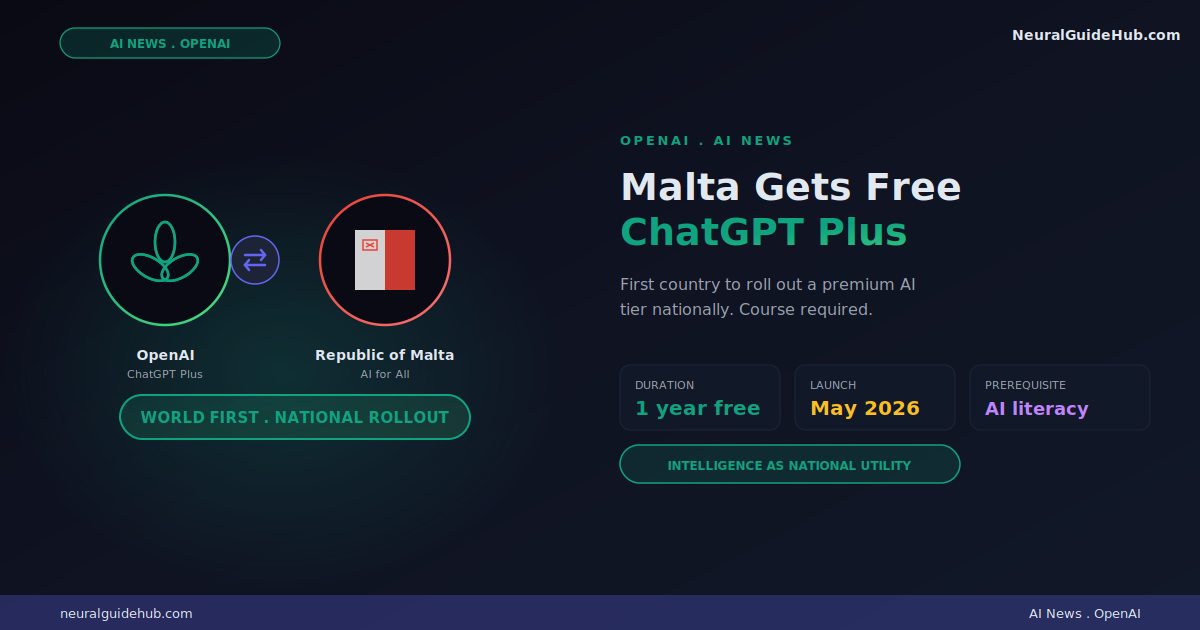
Malta just made a quiet move that could matter more than it looks. The OpenAI Malta partnership gives every Maltese citizen one year of free ChatGPT Plus. Not a pilot. Not a discount. Full access for the whole country.
This is a first. No country has rolled out a premium AI tier to its entire population. Malta did it through a national AI literacy program. Take the course, get the access.
How the program works
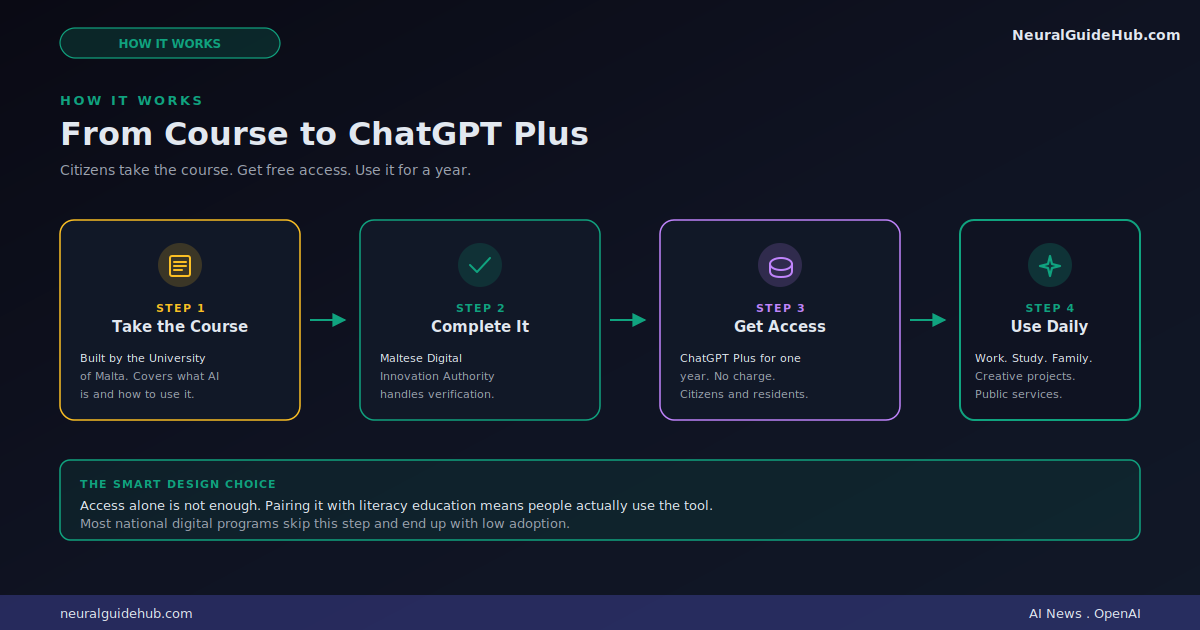
Citizens take an AI literacy course built by the University of Malta. The course covers what AI is. What it can do. What it can’t do. How to use it responsibly at home and at work.
Finish the course, get ChatGPT Plus free for a year.
The Malta Digital Innovation Authority runs distribution. The first phase launches in May. The program scales as more citizens complete the course, including Maltese residents abroad.
Why this matters
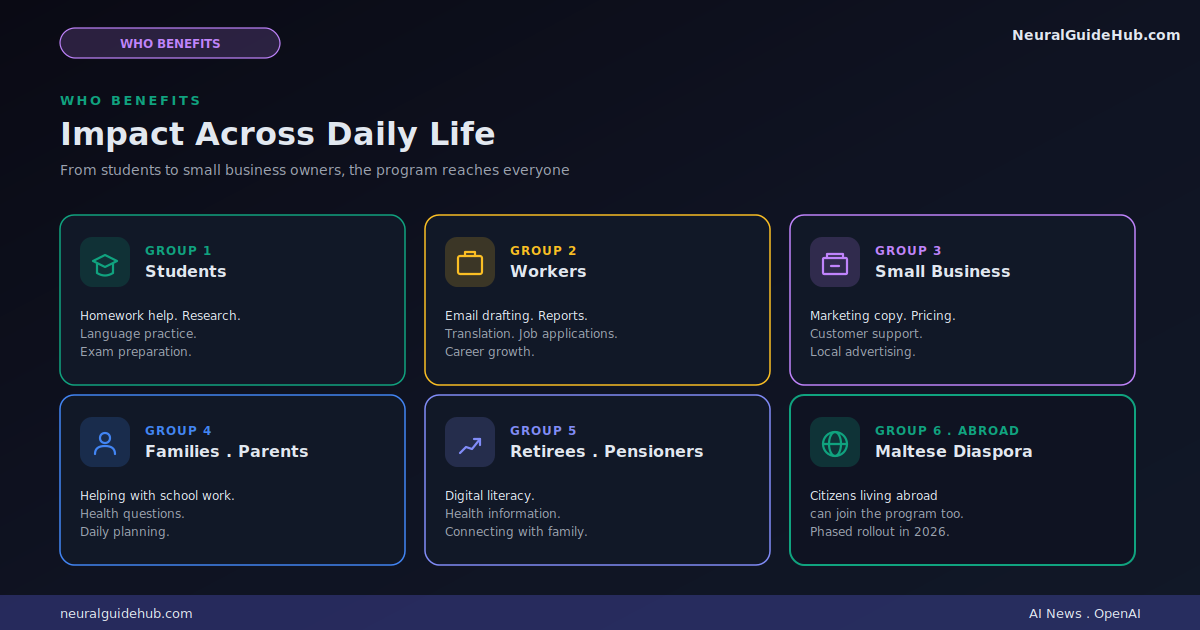
Most AI adoption stories are about companies. Sales teams. Developers. Enterprise rollouts. Malta flipped the script. The audience is everyone. Parents. Students. Pensioners. Truck drivers.
OpenAI’s framing is that intelligence should work like electricity. A national utility. Available when you need it. The Malta partnership is the first real test of that idea at country scale.
The pairing of access plus education is the smart part. Most AI rollouts just hand people the tool and hope. Malta requires the literacy course first. That increases the odds people actually use ChatGPT for something useful instead of just bouncing off it.
What the government is saying
The Maltese Minister for Economy framed it directly. Malta refuses to let citizens fall behind in the digital age. Every citizen gets the chance to build confidence with AI, regardless of background.
OpenAI’s George Osborne, who heads OpenAI for Countries, called Malta the first to lead on this in Europe and the world. He said all governments have a role in making sure populations have access and skills to make the most of AI.
Both statements point at the same thing. AI access is becoming a question of policy, not just commerce.
The OpenAI for Countries initiative
Malta isn’t the only country OpenAI is working with. The OpenAI for Countries program is already active in Estonia and Greece, supporting national education systems.
The model is built around local priorities instead of a one-size-fits-all rollout. Education. Workforce training. Public services. Startup support. AI literacy. Each country picks what fits.
Malta picked literacy plus access. The combination is what makes their version stand out.
What I’d watch
Completion rates. The course is the gate. If too few people finish, the access promise stays theoretical. Six-month completion data will tell the real story.
Actual usage patterns. Free access doesn’t equal useful access. The interesting metric is what people do with ChatGPT once they have it. Studying? Job applications? Small business work? Creative projects? That breakdown matters.
Year two. Free for one year is generous. What happens in year two will signal whether this is a permanent shift or a one-off marketing moment. If Malta keeps subsidizing access, other small countries will follow fast.
The bigger pattern
Small countries have always had an advantage in tech adoption. Estonia digitized government services decades before larger countries. Singapore moved fast on cashless payments. Malta is doing the same with AI.
The OpenAI Malta partnership isn’t just about ChatGPT Plus. It’s a template. National literacy plus subsidized premium access. If it works, every small EU country with a digital strategy will run the same play.
Larger countries can’t move this fast. The bureaucracy alone would take years. Smaller countries can pilot and prove the model in months.
For anyone tracking how AI policy actually rolls out in the real world, Malta is now the case study to watch.