Big consulting firms partnering with AI labs is usually a press release and not much else. Most of these announcements end up in PowerPoint and never escape. The new OpenAI PwC CFO agents partnership feels different. Mostly because there’s already a working agent running inside OpenAI’s own finance team, eating real procurement work. That’s not a slide deck. That’s a production system.
I’ve been watching enterprise AI rollouts for a while now. Most of them stall in the middle. They get stuck between proof of concept and “actually saves anyone time.” This one might not. Here’s why.
What’s Actually Being Built
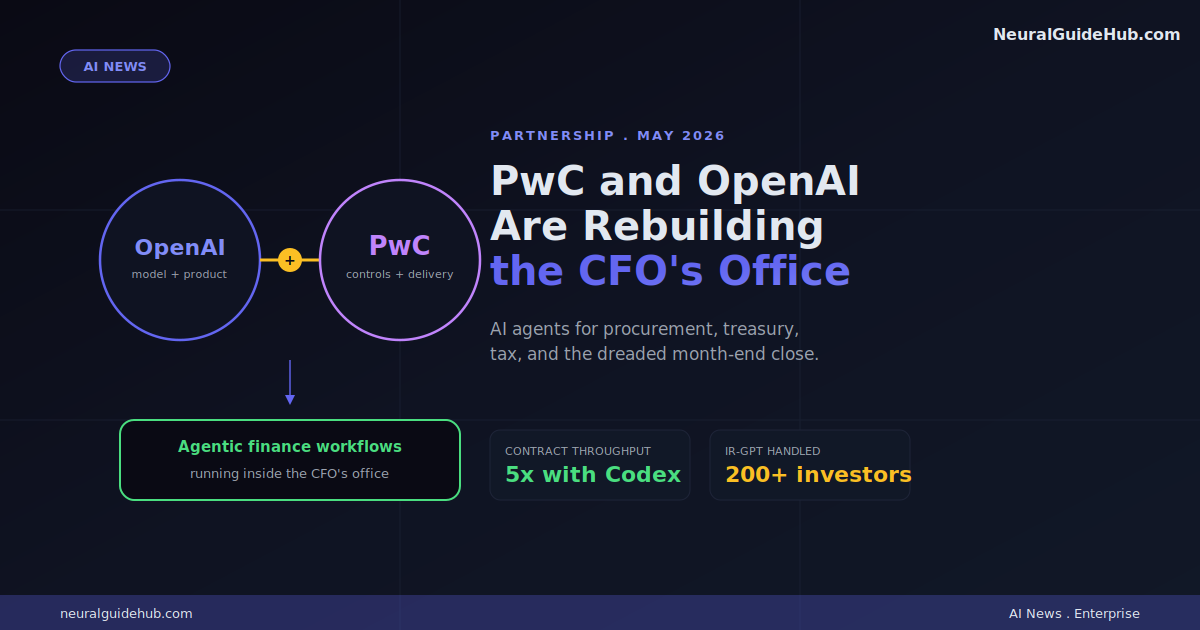
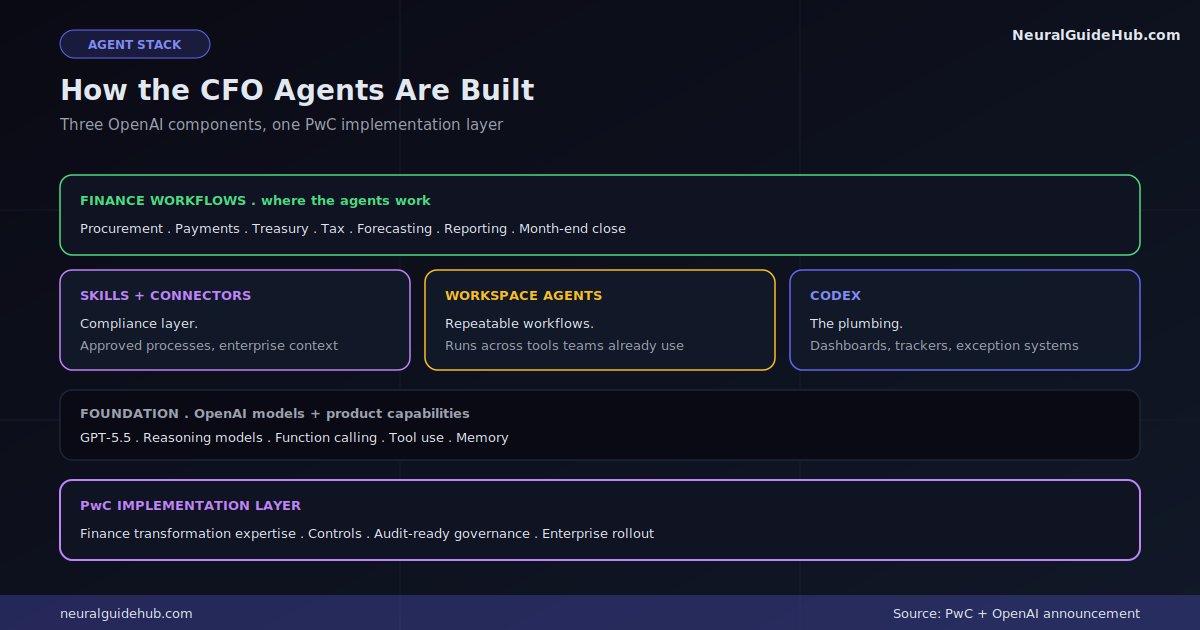
OpenAI and PwC are building AI agents specifically for the CFO’s office. Not generic chatbots. Not “AI for everything.” Agents wired into the actual operating rhythms of a finance function: planning, forecasting, reporting, procurement, payments, treasury, tax, and the dreaded accounting close.
The piece worth paying attention to: OpenAI is using its own finance team as what they’re calling “customer zero.” Meaning these agents are getting tested inside OpenAI before anyone else has to bet their quarter-end on them.
The “Customer Zero” Move Matters More Than People Realize
Most enterprise AI vendors sell stuff they don’t run themselves. That’s why so many corporate AI rollouts hit walls nobody warned the buyer about. Edge cases. Audit trails. Data lineage. The boring stuff that breaks production.
OpenAI flipping its own books to AI agents first changes the dynamic. They’re hitting the same problems any Fortune 500 CFO would hit. And they’re solving them in production, not in a demo environment.
Two real numbers from inside OpenAI worth quoting. Codex helped the finance team process 5x more contracts with the same headcount. And IR-GPT handled 200+ investor interactions during their last fundraise. Those aren’t pilot results. Those are the kind of numbers that make a CFO’s CFO sit up.
What the Agents Actually Do
The use cases are pretty grounded. Nothing science-fictional here. A few that stand out from the announcement:
- Monitoring payments and flagging exceptions before they become problems
- Reviewing contracts and invoices against company policy automatically
- Updating forecasts when business conditions shift, without a human rebuilding the spreadsheet
- Prepping reporting materials in advance of close cycles
- Surfacing risks before quarter-end or year-end, when nobody wants surprises
If you’ve ever worked in or near a finance team, you know each of those tasks eats real hours. Not glamorous hours. Necessary ones. The kind you can’t skip but also don’t add much value when a person does them.
The Tooling Behind It
The agents are built on three OpenAI components. Worth knowing:
- Codex handles the underlying tooling: dashboards, spend trackers, exception management systems. The plumbing.
- Workspace Agents make workflows repeatable across the apps finance teams already use. So you don’t have to rebuild your entire stack.
- Skills and Connectors ensure agents follow approved processes and pull from the right enterprise context. The compliance layer, basically.
That last part is where PwC earns its keep. They bring the finance transformation experience, the controls expertise, the implementation muscle. OpenAI builds the model layer. PwC keeps it from blowing up when it meets a real audit.
The Cost Question Nobody Talks About
One detail in the announcement caught my eye. Buried in the middle: “CFOs will need visibility into AI usage, token consumption, and projected spend, so finance teams can govern adoption the same way they manage other enterprise operating costs.”
Translation: agentic AI gets expensive fast. And finance leaders are about to learn what their engineering counterparts already know. Token costs are the new cloud bill. Watch them or watch them eat your budget.
Whether this collaboration actually delivers tooling for that visibility piece is one of the things I’d want to see before getting too excited.
What I’d Watch Next
A few things on my radar:
- The audit story. Public companies have to support every number in their filings. How do AI agents create reviewable audit trails? PwC has opinions here. Let’s see them get implemented.
- Which clients show up first. If a couple of Fortune 100 CFOs put their names on this within six months, it’s real. If announcements stay vague, it’s another consulting deck.
- The pricing model. Is this seat-licensed? Outcome-based? Per-agent? The structure tells you whether PwC actually believes in the productivity claim.
- Competitive response. Deloitte and KPMG aren’t going to sit this out. Watch for similar announcements from them in the next quarter.
The Bigger Picture
Tyson Cornell, PwC’s US Advisory Leader, framed this as finance moving “from process efficiency to intelligent, decision-centric operations.” Consultant-speak, but the idea behind it isn’t wrong.
For the last decade, finance teams have been chasing efficiency. Automating data entry. Killing manual reconciliations. Trimming headcount on repetitive work. The next move isn’t more efficiency. It’s letting AI handle the repetitive stuff while humans focus on judgment calls. Forecasts that account for things spreadsheets can’t. Risk decisions that involve actual context.
That’s the bet behind OpenAI PwC CFO agents. Whether the bet pays off depends almost entirely on the next 12 months of real client deployments. The internal OpenAI numbers are encouraging. The translation to a Fortune 500 finance org with 30 years of legacy systems? That’s the harder problem.
Worth watching. Not worth getting your hopes up too soon. But this is the most concrete enterprise AI partnership I’ve seen this quarter, and it’s pointed at one of the highest-impact functions in any company.
If you run finance and you haven’t started thinking about agent governance yet, the clock just started ticking.