I have been watching the AI-music fight for two years now, and most of it has been ugly. Lawsuits. Takedown notices. Anonymous accounts uploading fake Drake songs and racking up millions of plays before anyone noticed. So when this deal crossed my feed, my first reaction was suspicion.
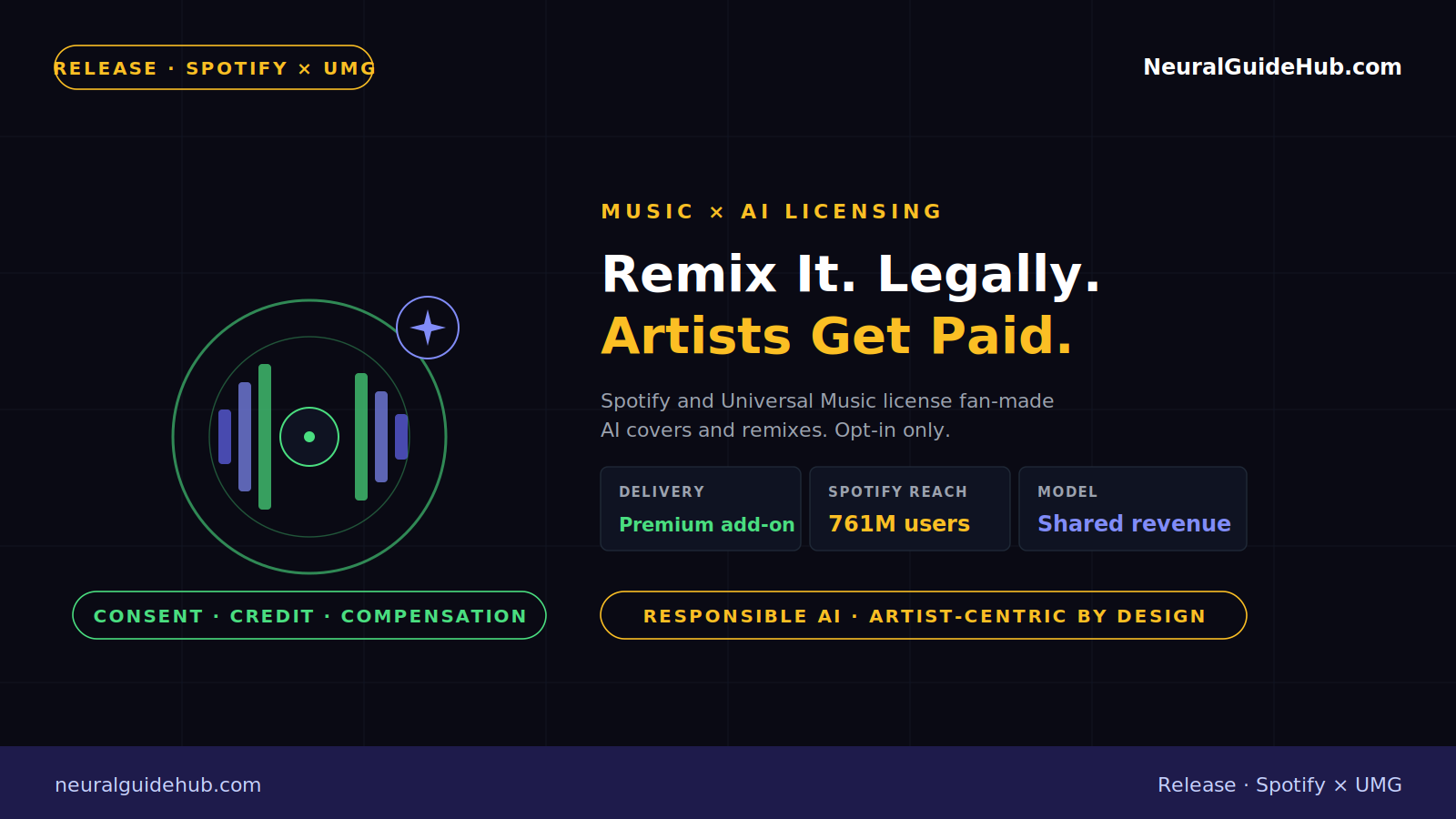
Then I read the fine print. Spotify AI covers are real, and they come out of two licensing deals with Universal Music Group covering both the recordings and the publishing side. A fan picks a song from a participating artist, remixes it with generative AI, and the people who actually made that song collect money on the result.
The people who made the song get paid. Read that again, because for two years the whole problem was that they did not.
What Spotify And UMG Actually Signed
Here is the mechanism. Spotify gets to build a tool. Fans use it to make covers and remixes of songs from artists who agreed to take part. It runs on generative AI and arrives as a paid add-on bolted onto a Premium subscription.
Money moves in two directions at once. The fan pays for access. The artist takes a cut of whatever value those remixes throw off, sitting right on top of the streaming royalties they were already earning.
It is a second paycheck, not a swap for the first one.
And it only touches artists who said yes. If you never opt in, your catalog never shows up in the remix tool. Nobody wakes up to find their back catalog chopped into AI edits they never approved.
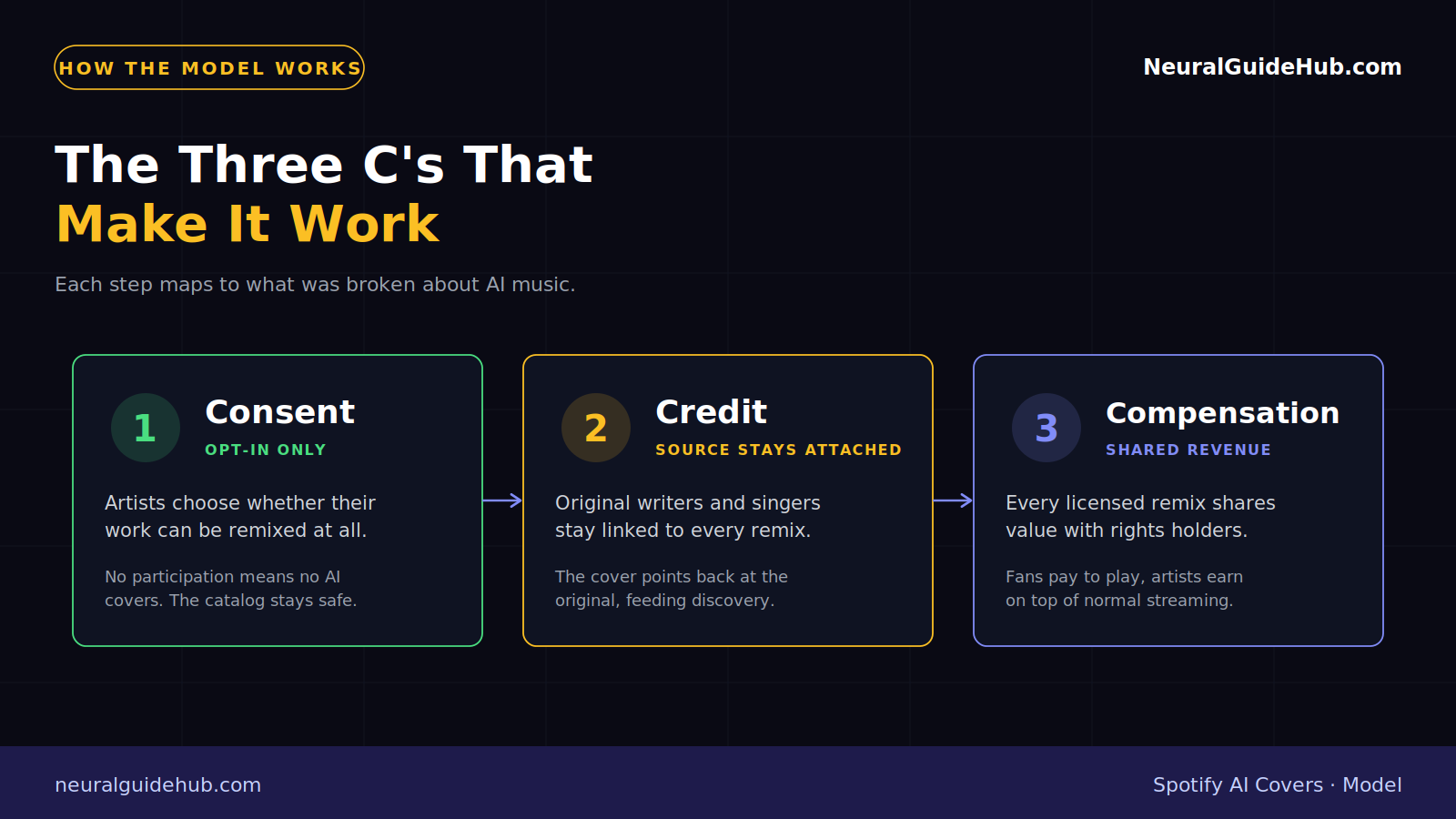
The Three C’s: Consent, Credit, Compensation
Spotify hung the entire pitch on three words. I rolled my eyes at first, the way you do at any corporate slogan. But each one happens to fix something that was genuinely broken, so I will give them this round.
Consent
Artists decide whether their work can be touched at all. No yes, no remixes. That one line is the wall between this and the swamp of unauthorized clones that have been clogging streaming services since 2024.
Credit
Whatever a fan builds, the original writers and performers stay bolted to it. The cover does not bury the source. It points a finger straight back at it, which happens to be great for getting people to the original.
Compensation
Each licensed remix throws off value, and that value lands with the rights holders. Fan pays to make the thing. Artist earns when it gets made. Clean.
Why This Is A Discovery Engine, Not Just A Toy
Think about how a remix has always worked. Somebody flips a track, it blows up, and suddenly a wave of people go digging for the original. That has happened a thousand times on SoundCloud and TikTok, except the original artist usually saw none of it.
Now that whole chase stays inside Spotify, with the artist’s name stamped on every step of it.
For a musician, this turns a superfan into an unpaid marketing department. The fan does the creative labor. Spotify sorts out the rights. The original song quietly collects a fresh batch of listeners. That feedback loop, honestly, is the real product. The remixes are almost a side effect.
What This Means For Artists
The sell to musicians is simple enough. A new income line, zero cost to opt in, and your name riding along on everything fans cook up.
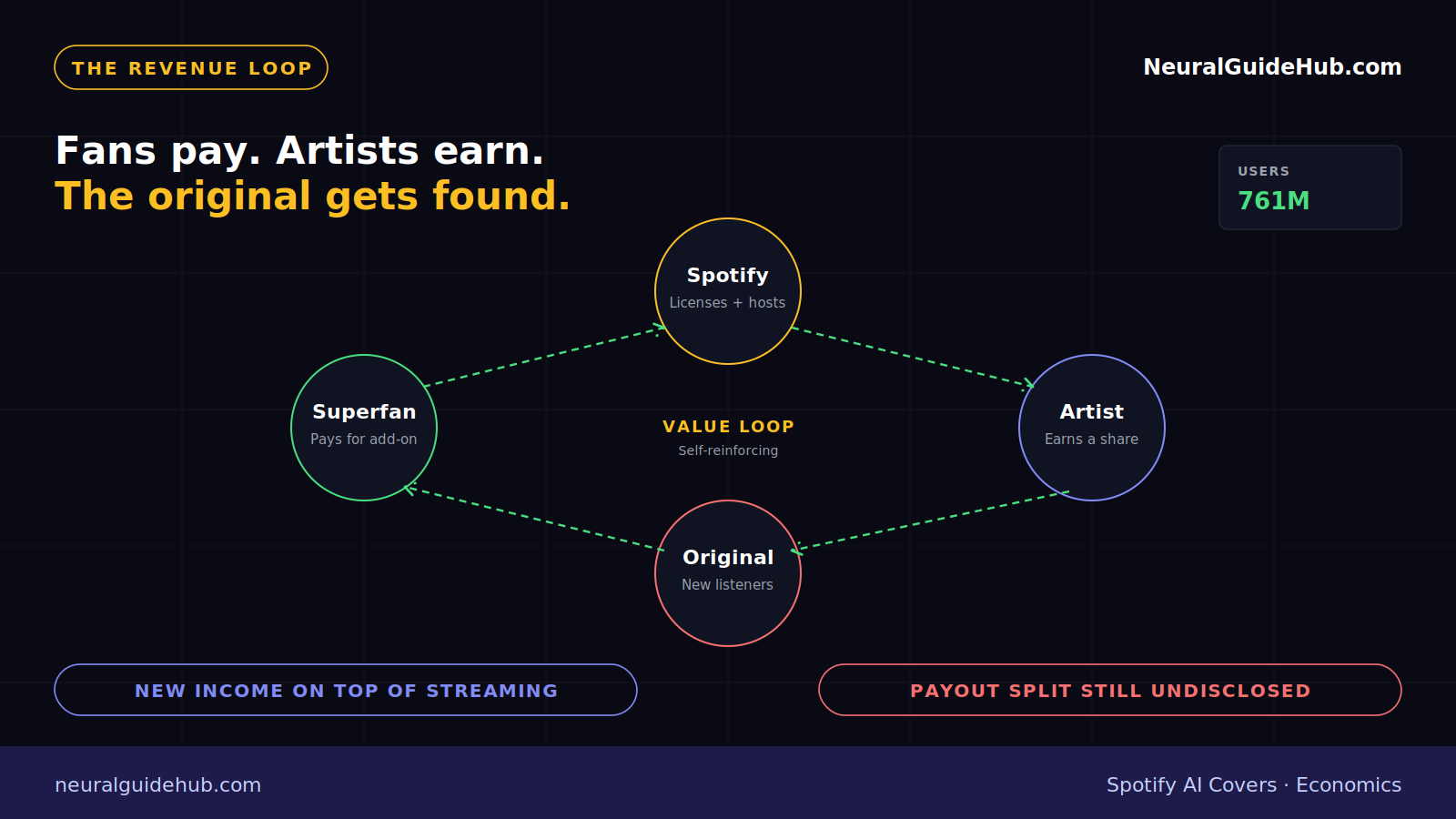
The scale is not small. Spotify counts 761 million users and 293 million paying subscribers across 184 markets. Carve off even a sliver of that crowd willing to pay for a remix tool and you have a real pot of money, flowing to rights holders instead of some anonymous uploader in a country you have never visited.
But I keep circling back to one number nobody has shown me. The split. Spotify and UMG have stayed quiet on exactly how much an artist pockets per AI cover, and that figure decides everything. Real money, or a rounding error you forget to check.
The Skeptic’s Take
A lot of artists are going to be cold on this, and frankly they have earned the right. For two years, AI trained on their work meant value draining away from them, not toward them. A licensed, consent-first model is the correct fix on paper. The payouts are where it lives or dies.
There is a softer worry too. Does a flood of fan remixes water down an artist’s catalog, or does it pull fans in closer? I genuinely do not know. Different artists will land in different places on that one, which is the whole reason opt-in had to be the foundation.
The Bigger Signal
Strip away the press-release language and here is what actually happened. Two of the biggest forces in music looked at the AI problem and decided licensing it beats fighting it.
That is the story under the story.
Spotify and UMG are wagering that AI music’s future is consent and a revenue split, not courtrooms and takedowns. If the checks clear and artists feel paid, every label and platform behind them gets a template to copy. If the money turns out to be a joke, this joins the pile of well-meaning experiments that went nowhere. Either way, it is no longer theoretical. The thing is live.