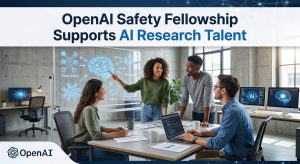
Safety fellowships aren’t exactly where most people expect the AI arms race to heat up. But OpenAI just launched one anyway, betting that independent researchers might crack the alignment puzzle faster than their own teams.
The OpenAI Safety Fellowship targets researchers working on AI safety and alignment problems outside traditional corporate structures. It’s a pilot program that offers funding, mentorship, and access to OpenAI’s models for work that might otherwise struggle to find support.
What the fellowship actually covers
The program doesn’t just throw money at problems and hope they stick. Fellows get direct access to OpenAI’s research infrastructure, including compute resources and model access that would normally cost thousands per month. They’re also paired with OpenAI researchers for guidance, though the company insists the work remains independent.
Here’s what’s included in the package:
- Funding for living expenses during the fellowship period
- API credits and compute access
- Regular check-ins with OpenAI safety researchers who’ve been working on alignment problems for years
- Access to internal research tools
- Publication support
The timeline runs for six months initially, with possible extensions based on progress and impact.
Why OpenAI thinks outsiders might solve this first
There’s something refreshingly honest about a company admitting it might not have all the answers internally. OpenAI’s safety team has been wrestling with alignment problems for years, but progress remains frustratingly slow compared to capability advances.
Independent researchers often approach problems from angles that corporate teams miss. They’re not constrained by product roadmaps or quarterly pressures. And they’re definitely not worried about accidentally undermining their employer’s next big model release.
But there’s also a cynical read here.
Funding external safety research lets OpenAI point to broader community involvement while continuing to push capability boundaries internally. It’s smart PR that also happens to potentially solve real problems.
The talent pipeline problem nobody talks about
AI safety research suffers from a brutal talent shortage that makes even software engineering recruitment look easy. Most computer science programs barely touch alignment theory, and the field’s interdisciplinary nature scares off researchers who prefer clean problem boundaries.
OpenAI’s fellowship directly addresses this pipeline issue by giving promising researchers a way to dive deep without the usual academic funding nightmares. Graduate students can focus on alignment work instead of writing grant proposals or teaching undergrad classes.
The mentorship component matters more than the money, honestly. Safety research is notoriously difficult to evaluate, and having experienced researchers provide feedback could accelerate progress significantly.
What success actually looks like
OpenAI hasn’t defined specific success metrics for the fellowship, which is either refreshingly flexible or concerning depending on your perspective. The company mentions developing “the next generation of talent” but doesn’t quantify what that means.
Real impact would look like breakthrough research that gets implemented across the industry, not just published in academic journals. But measuring alignment research effectiveness remains nearly impossible until we’re dealing with systems that might actually pose alignment risks.
The fellowship’s true test won’t be the papers it produces. It’ll be whether fellows go on to lead safety efforts at other AI companies or start their own research organizations focused on these problems.
That’s the long game OpenAI is really playing here: seeding an entire generation of researchers who think about safety first, not as an afterthought.
https://openai.com/index/introducing-openai-safety-fellowship