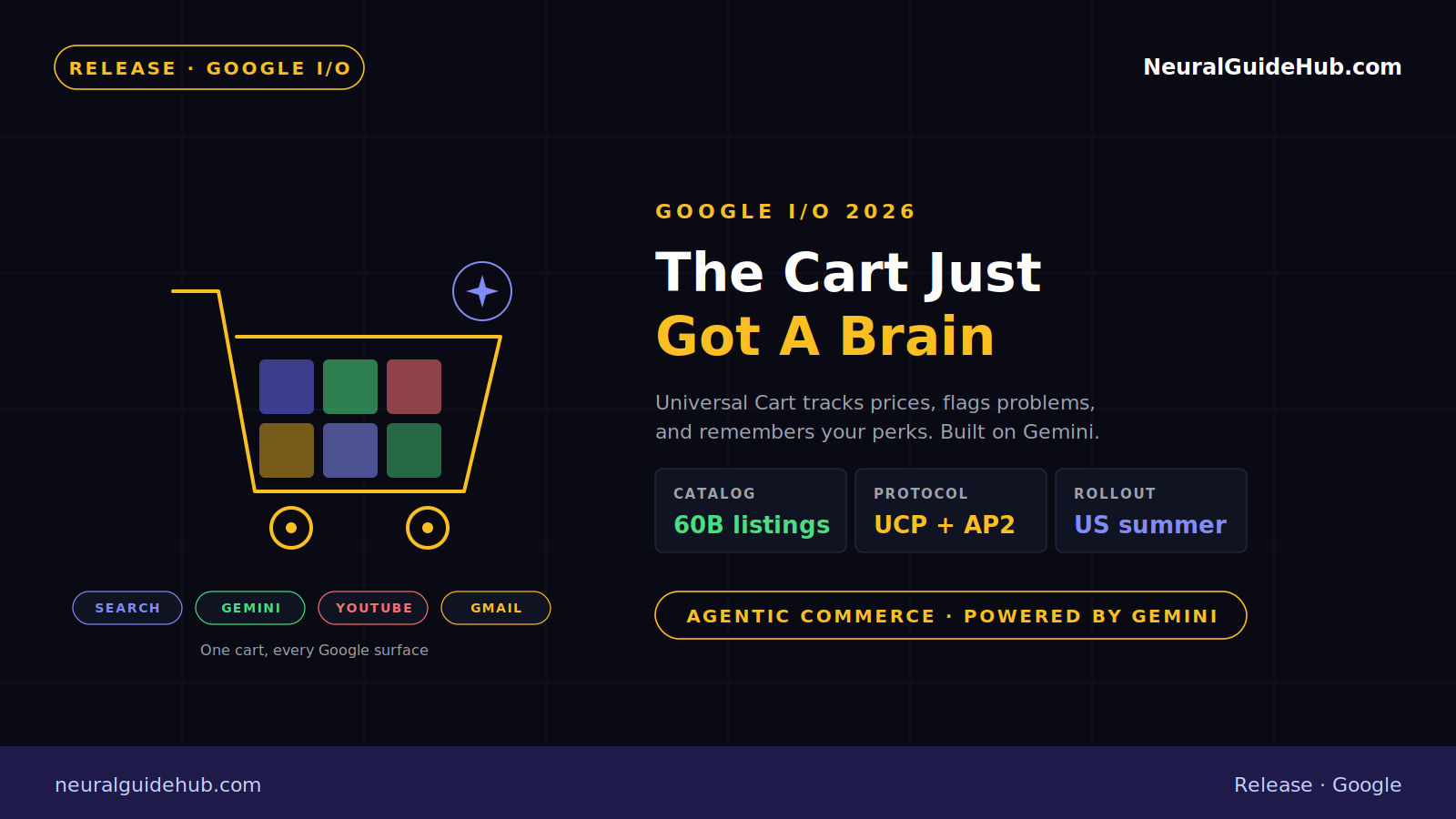
The shopping cart just got a brain. At Google I/O 2026, Google introduced the Google Universal Cart, a unified cart that follows you across Search, Gemini, YouTube and Gmail, and quietly works in the background to find deals, flag problems and remember what you actually want. For an industry that has spent twenty years asking shoppers to manage carts on every site they visit, this is a different posture.
The cart sits on top of Google’s Shopping Graph, the company’s catalog of over 60 billion product listings, and runs on Gemini models for the reasoning bits.
What Google Universal Cart Actually Does
The simple version: one cart, every Google surface. Add a pair of running shoes from a YouTube review, drop a kitchen gadget in while chatting with Gemini, save a desk lamp you spotted in Search, and they all land in the same place.
The interesting part is what happens after you add something. Universal Cart starts watching for price drops, surfaces price history so you know whether the current sticker is actually a good number, and pings you when an out-of-stock item comes back. None of that requires you to set up alerts.
Because it sits on Google Wallet, the cart also knows your payment method perks and loyalty balances. That credit card with 5 percent back at Target you forgot about? The cart remembers.
How The Cart Actually Works
Google leaned on a specific example to show the reasoning piece: building a custom PC.
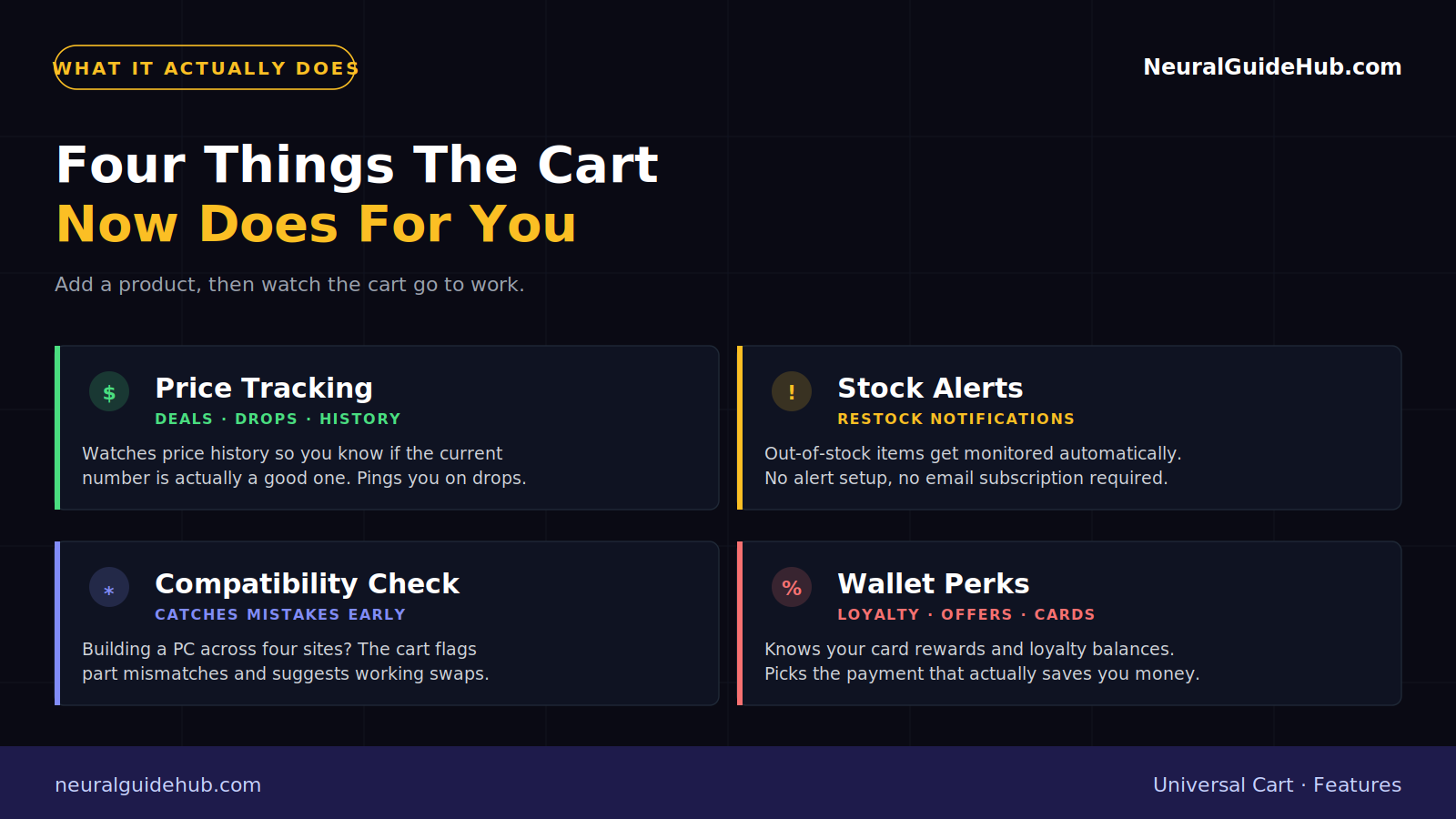
Drop parts from four different retailers into one cart, and the system flags incompatibilities before you check out. Wrong socket motherboard for the CPU, power supply too weak for the GPU, that kind of thing. It also suggests swaps when something does not fit. This is the part that signals a real shift, because catching mistakes used to be your job or a Reddit thread’s.
Checkout works two ways. You can pay with Google Pay in a few taps directly from the cart, or bounce over to the merchant site to finish the order. Either way, the brand stays the merchant of record, which matters for returns, warranties and disputes.
Launch Partners At Checkout
Google named a launch list that covers most of the categories shoppers actually care about: Nike, Sephora, Target, Ulta Beauty, Walmart, Wayfair, plus Shopify merchants like Fenty and Steve Madden. Beauty, apparel, home goods, mass retail. The Shopify hook is the quiet headline here, because it pulls in a massive long tail of independent stores.
The Universal Commerce Protocol Story
Universal Cart only works because Google spent the last year shipping the plumbing. The Universal Commerce Protocol, co-developed with retailers, gives agents a shared language for browsing, adding to cart and checking out across different store backends.
UCP-powered checkout is expanding to Canada and Australia in the coming months, with the U.K. queued up after that. YouTube checkout in the U.S. is on the same track, along with new verticals starting with hotel booking and local food delivery. The pattern is clear: pick categories where comparison shopping is painful, then slot the agent in.
AP2 And Agentic Purchases
The Agent Payments Protocol is the other half of the story. AP2 is what lets an agent buy on your behalf without you holding your breath about what it might do with your card.
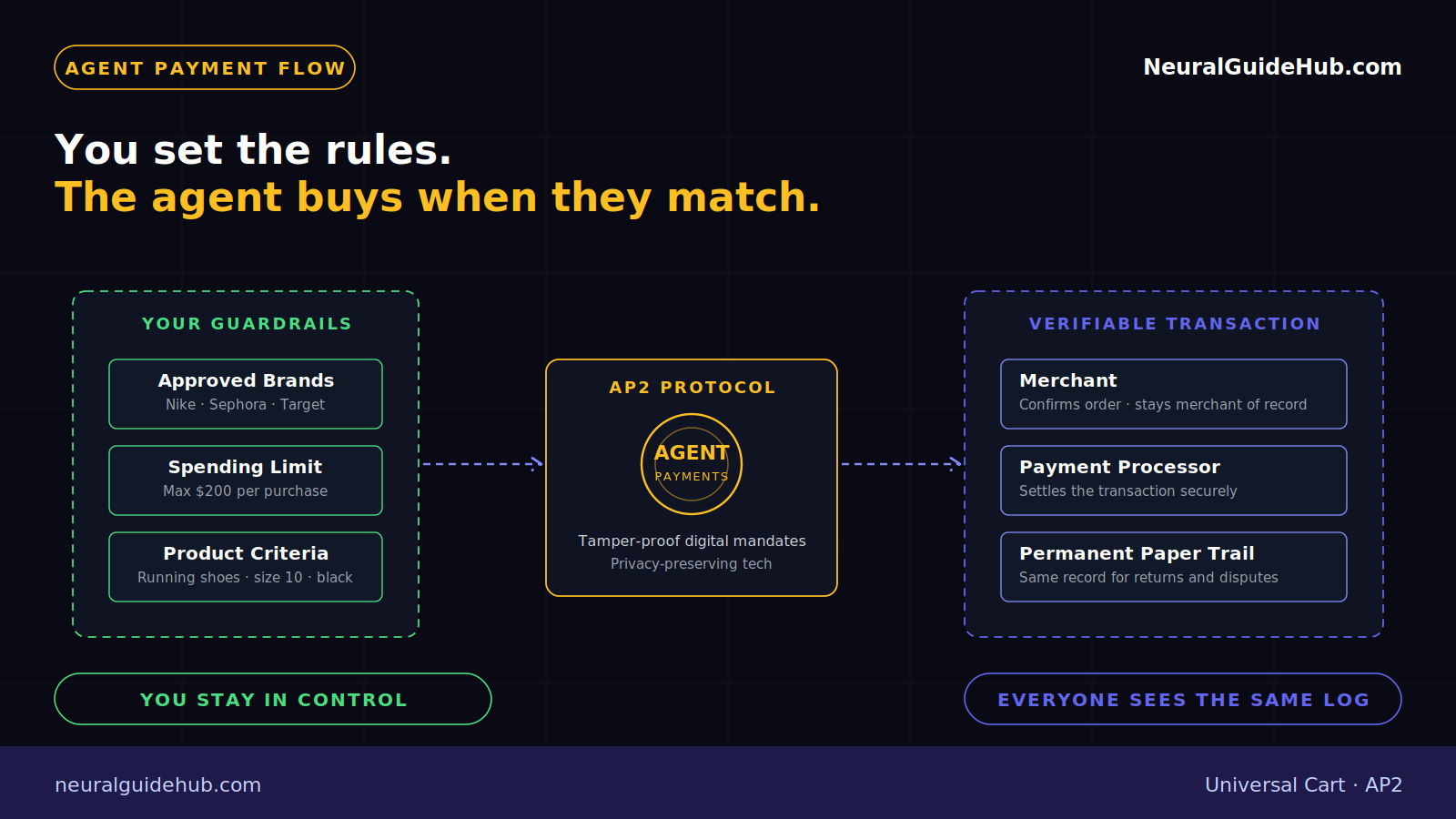
You set guardrails up front. Specific brands, specific products, a spending ceiling. The agent only fires the transaction when your criteria match. Underneath, AP2 builds a verifiable record linking you, the merchant and the payment processor, with tamper-proof digital mandates so there is always a paper trail.
Returns get cleaner because both sides are looking at the same record. AP2 starts rolling into Google products in the coming months, with Gemini Spark first in line.
Why This Matters For Retailers
If you sell things online, the calculation shifts. Search and product page SEO were the table stakes for the last decade. The next table stakes look like UCP support, structured catalog data clean enough for an agent to reason over, and being on the launch list for agentic checkout in your category.
Merchants that sit outside this loop will still get traffic, but the comparison work the cart does in the background will increasingly happen without their pricing being visible at the moment of decision. That is a different kind of competition.
The Honest Caveat
This is rolling out across Search and the Gemini app in the U.S. this summer, with YouTube and Gmail to follow. Universal Cart will live or die on whether the price tracking is accurate, the compatibility checks catch real problems, and checkout actually completes without weird edge cases.
Google has the catalog and the surfaces. The execution is the question. If it works at the level the demo suggests, the shopping cart as a passive container is on its way out.
https://blog.google/products-and-platforms/products/shopping/google-shopping-cart/